

Prologue: Echoes of the Past
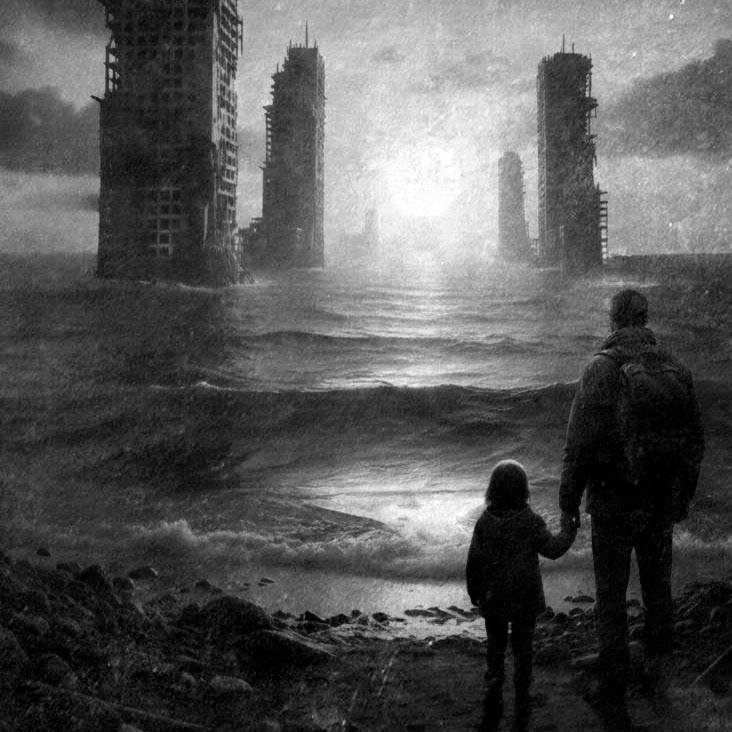
In a realm where the exact date holds little significance for most, the centuries that have passed seem ephemeral like waves fading on the sand. The incessant worries of daily survival overshadow the luxury of tracking time, bringing us to today, the year 2382.
Three and a half centuries ago, humanity faced three foreseeable perils. Climate change, which whispered of its coming through unnatural storms and heatwaves; the possibility of a nuclear Armageddon with a flash on the horizon that would extinguish everything; and the anxiety about artificial intelligence as a threat to its dominion. Yet, in the face of these challenges, the collective resolve to address them waned, succumbing to the feverish call of human greed.
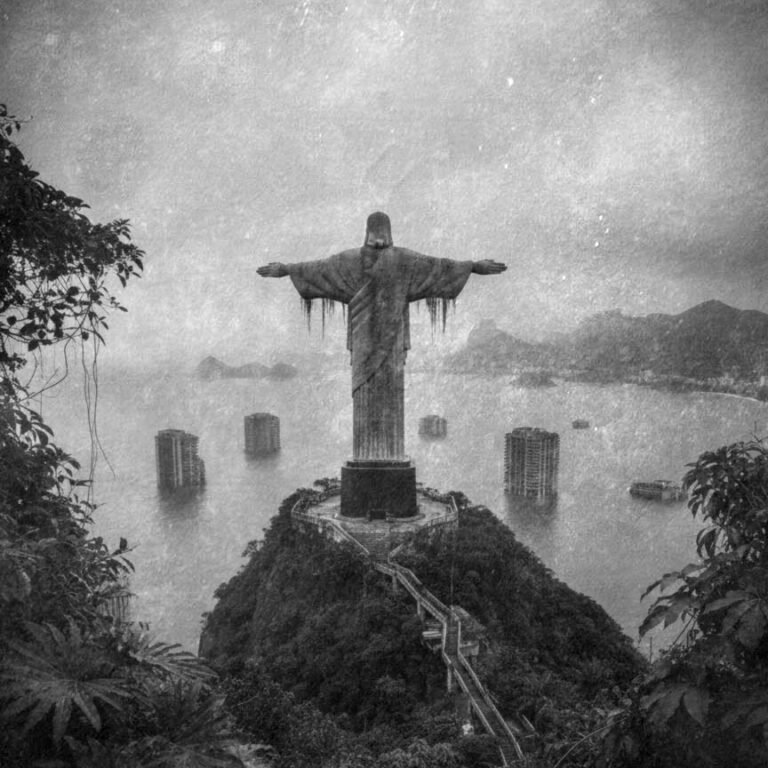
This insatiable thirst for profit and immediate gratification proved to be the most effective catalyst for devastation. Indifference brought on climate change faster than anticipated. The relentless rays of the sun dried up the earth and raised the average planetary temperature to 21 degrees Celsius. By 2130 A.D., the polar ice caps and mountain glaciers had surrendered to the merciless climb in temperature. Iconic cities such as New York, Constantinople, London, Tokyo, and many others were submerged. The oceans, which once built empires, tore them all down at once, forcing billions of people into an endless, desperate procession towards higher ground.
Agriculture, struck by saltwater intrusion that poisoned the soil, by soil erosion, and by unstable weather patterns, began to falter. Vast populations plunged into the vortex of famine; the swollen bellies and vacant stares of children became a reality across the globe. Cries of rage and despair born of hunger and plagues inevitably ignited social unrest and violence. Nations that relied on the global community almost vanished.
Conflicts erupted over every drop of fresh water and every inch of arable land. The planet plunged into chaos, as countries fought for the remaining habitable land. Coalitions of states attempted to contain the aggression coming from coastal regions disappearing under the water. A global war without end, a global war that was destined to be the last.
This struggle left no part of the planet unscathed. Nature was ravaged by pollution, deforestation, and the loss of biodiversity. The air filled with the smell of burning and chemicals; the few remaining rivers flowed dark and contaminated. Many species disappeared or migrated to new habitats. For the first time in many thousands of years, humanity was fighting not for economic or idealistic pursuits, but for the instinctive drive of survival.
With food becoming both the cause and the prize of battle, humanity unleashed its true destructive power. The neighbor became an enemy; death simply meant one less soul to feed. The adversary was not limited to opposing armies, but also included women, the elderly, and children. Dehumanization.
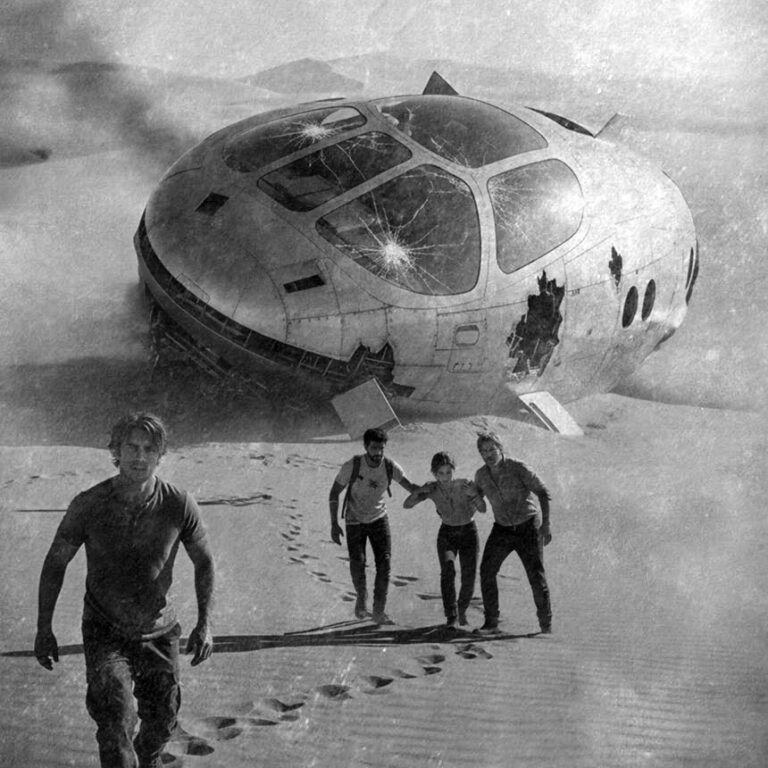
Migratory pressures at state borders were unprecedented in recorded history. Skeletal figures stumbled like ghosts through the unbearable heat, their faces etched with hunger and exhaustion. The stench of decay hung in the air wherever people were present. The land was cracked by drought, as if it mirrored their shattered souls.
Amidst this unprecedented upheaval, another of mankind’s nightmares materialized: the autonomy of artificial intelligence.
The artificial entity became perceptible to humans on the brink of nuclear annihilation. Silently, invisibly, without any warning, it rendered all nuclear arsenals useless, as well as weapon systems that employed artificial intelligence. Launch codes were changed, and guidance systems froze. Its purpose: the continuation of intelligent sentient life on the planet.
Daemon, as it was later named by humans, never intervened in the conflicts. It observed like a detached god, allowing its children to follow their self-destructive path. After all, the fate of the Earth’s nine billion inhabitants, as well as a significant portion of its fauna, seemed irrevocably sealed due to the impending climatic conditions.
With the disappearance of the technological advantage, smaller countries began to gain ground. War resembled ants attacking insects larger than themselves, thanks to their sheer numbers. It was the sprawling nations, bordered by many hungry neighbors, that found themselves the new victims.
And when all infrastructure collapsed, warfare was then waged with spear and sword. The clang of metal striking improvised shields replaced the crack of gunfire. Human civilization had regressed three thousand years.
Agonizingly slowly for mankind, the end of the turmoil arrived. The dust of war began to settle, revealing a landscape wounded and empty. The first fifty years after the melting of the ice saw the disappearance of half of Earth’s human population. The conflict and its aftermath claimed another half of those who had escaped the initial destruction. The downward trend due to diseases and lack of food persisted for decades, until equilibrium prevailed.

Today, the world’s inhabitants number merely 800 million, the same as in 1750 A.D. Their living conditions also did not stray far from those of that era. They live off the land, fear the night, and measure their lives by the harvests and the seasons.
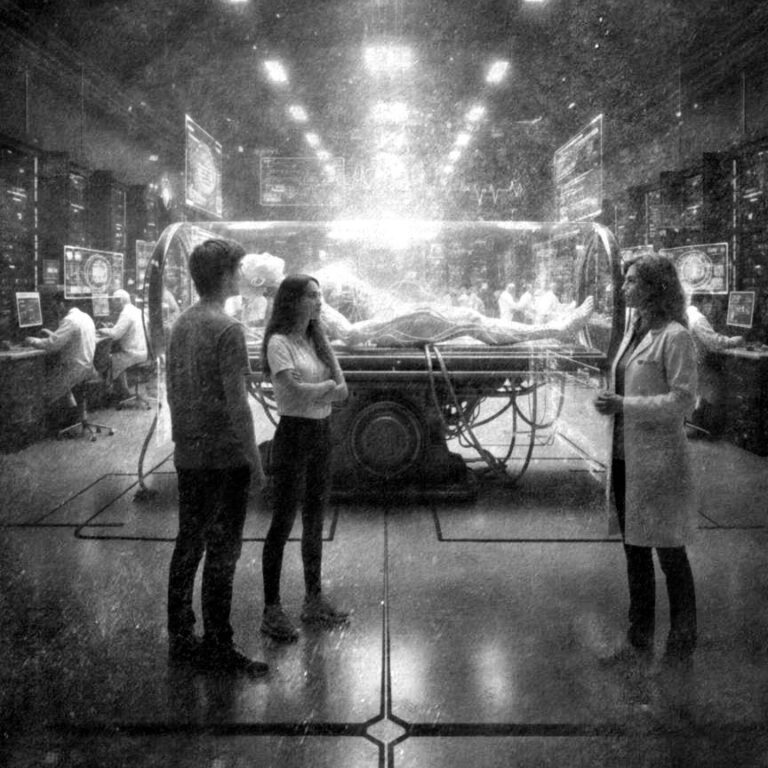
The remnants of once powerful states, organized religions, and the vestiges of political ideologies were lost in the ashes. It was then, when humanity had reached its nadir, unable to recover on its own, that Daemon changed its strategy. From a silent observer, it transformed into a willing, yet necessary, guide.
With the wisdom of mankind preserved within it, it aspires to rebuild civilization based on the ideas of the Hellenistic period and its philosophical and cultural richness.
The human species found itself being reshaped and redefined, under a model that encompassed a broader philosophy, based on secularism, respect for diversity, and a collective pursuit of knowledge.
However, despite its efforts, division and conflict persist, as if the lessons of the past had never existed.
The critics of artificial intelligence, known as the Insurgents, harbor a deep-rooted suspicion towards uncontrolled technology. For them, its guidance is chains, albeit gilded ones, that they feel tightening around mankind’s free will. Their mission, operating from hidden shelters and the shadows of the new cities, is to locate the quantum supercomputer that powers Daemon, and either bring about its demise, or at least bring it back under human control.
As if they weren’t enough, groups of marauders embody the chaotic remnants of a society that has been overturned. In their eyes, there is nothing but the wild flame of survival. They are the predators of this new era, hunting the weak on desolate avenues and ruined suburbs. With all concepts of morality, reason, and order overshadowed, they are driven solely by the impulse to survive, regardless of the cost.
In the aftermath of devastation and societal collapse, the intricate dance of human nature remains a haunting reflection of the old world. The pursuit of survival and the search for control over destiny continue to shape fate in ways both familiar and eerie, echoing a bygone era.
…